Find Out the Five Love Languages With an Online Test
What This Assessment Really Measures
Most people think they already know how they give and receive care, but everyday habits often mask what truly registers as love. As you reflect on how you respond to reassurance, gifts, time, touch, and helpful actions, the test love language framework offers a simple doorway into deeper self-knowledge. Rather than pigeonholing personalities, this assessment highlights preference patterns that tend to emerge repeatedly in relational life. You learn which signals feel nourishing, which gestures land flat, and where mismatches create invisible friction. That clarity reduces guesswork and replaces vague expectations with concrete practices you and your partner can actually try.
Underneath the surface, this method operates like a translator between two human nervous systems. It decodes which messages your body reads as safety, care, and delight, then connects those signals to practical behaviors. When you understand your signature cues, you can ask for what matters without drama, and you can offer the right currency of care to others. The process becomes less about grand gestures and more about consistent, meaningful micro-moments that accumulate into trust.
- Spot repetitive patterns that reveal genuine needs.
- Turn conflicts into experiments that test better habits.
- Reduce resentment by clarifying expectations up front.
- Build momentum through small, repeatable wins.
The Five Core Affection Styles and the Psychology Behind Them
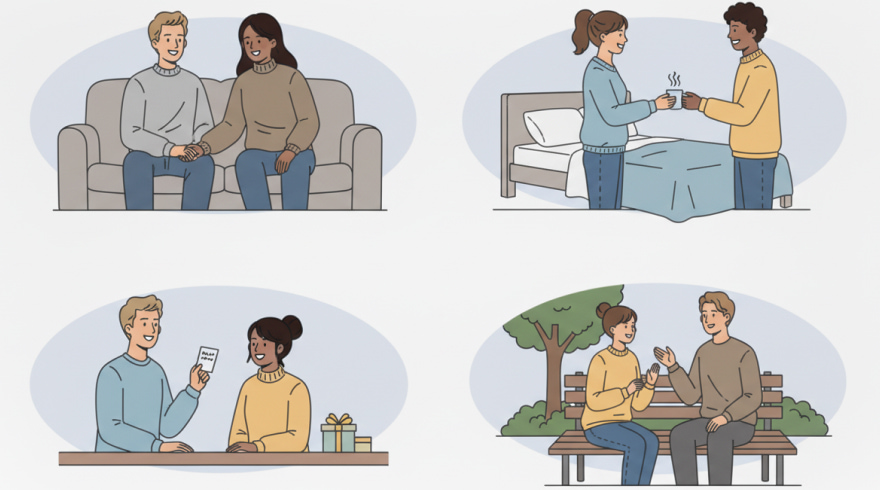
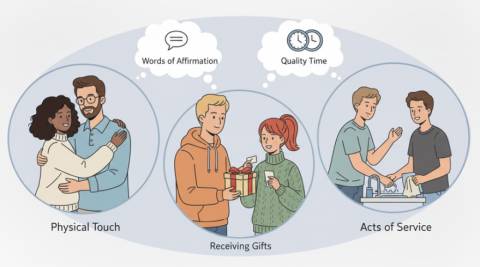
Behind the popular model sits a practical blend of behavioral observation and attachment-aware thinking. Beyond pop culture, the five love languages test draws on observable behavior patterns rather than vague ideals. It looks at how individuals tend to interpret attention and care, then maps those tendencies to simple, learnable behaviors. Words of encouragement, unhurried presence, supportive actions, tangible tokens, and warm contact each whisper a different message to the nervous system: “I see you,” “I’m with you,” “I’ve got you,” “I remembered you,” or “I am close to you.”
Psychologically, preference hierarchies often reflect formative experiences, cultural context, and the stories people tell themselves about love. You might crave reassurance because past criticism stuck, or you may light up at shared time because companionship is your anchor. None of these are right or wrong; they are data points. Understanding them allows you to choose responses that restore safety and increase goodwill, especially when stress narrows patience.
- Affirmations soothe self-doubt and amplify courage.
- Presence lowers anxiety by providing predictable connection.
- Supportive tasks convert intention into visible relief.
- Thoughtful tokens symbolize attention and memory.
- Warm contact settles physiology and promotes bonding.
Why This Assessment Improves Communication and Satisfaction
Clarity beats mind reading, and shared language beats assumptions. For measurable progress, the love language test becomes a shared vocabulary you can use during real conflicts. Instead of arguing over who is “right,” you co-create a plan for how to repair quickly and invest consistently. The shift from abstract ideals to specific rituals turns compassion into something trackable.
As couples or individuals practice, emotional bank accounts fill with reliable deposits. You notice earlier when someone’s reserves run low, and you know how to top them up without guessing. That leads to fewer blowups, faster recoveries, and a sense of team cohesion. Even outside romance, families, friendships, and teams, the same clarity strengthens trust because everyone understands how care is best delivered.
- De-escalate tension with personalized repair scripts.
- Design weekly rituals tailored to what counts for each person.
- Measure progress through mood, energy, and responsiveness.
- Prevent misfires by replacing generic gestures with precise ones.
How to Take, Interpret, and Apply Your Results
Preparation matters: answer when you’re calm, not mid-argument, and think about recent weeks rather than once-in-a-lifetime moments. When convenience matters, the love language test online format lets you answer honestly without scheduling delays. Take notes on any items that spark a strong reaction, positive or negative, because those edges often reveal the most useful insights. After scoring, rank your top two preferences and define one small experiment you’ll try for each over the next seven days.
| Affection style | Signals you might notice | Practice to try this week |
| Affirming words | Lightness after praise, sensitivity to tone | Share one specific appreciation daily |
| Shared time | Energy from unhurried presence, aversion to distraction | Schedule a device-free 20-minute check-in |
| Helpful actions | Relief when tasks disappear, gratitude for initiative | Complete a nagging chore without being asked |
| Tangible tokens | Joy from thoughtful surprises, fondness for keepsakes | Leave a small note or memento midweek |
| Warm contact | Calm after hugs, craving gentle touch during stress | Initiate a longer-than-usual embrace daily |
Interpreting results works best when you treat them as a hypothesis to test in your real life. For reliable insights, the most accurate love language test pairs clear questions with scenario-based prompts. Track how experiments affect mood and conflict recovery, then refine your rituals. Over a month, you’ll gather enough evidence to confirm what truly resonates and which habits are just cultural noise.
- Block time on your calendar for connection experiments.
- Use a shared note to log what lands and what misses.
- Replace vague promises with specific, repeatable actions.
- Review progress every two weeks and adjust together.
Using Your Insights As a Couple
Partnership thrives on repeatable, caring signals that match each person’s blueprint. If you’re building rituals together, the love language test couples approach can transform check-ins into playful discovery. Start with low-stakes experiments, celebrate micro-wins, and keep the tone curious rather than clinical. Think of the process as tuning an instrument rather than grading a performance.
Routines do the heavy lifting, especially under stress, so aim for consistency over grandiosity. To set a baseline, the 5 love language test can serve as a snapshot before and after counseling. When you track how quickly you repair after disagreements, you get an honest picture of progress. Over time, your shared toolkit grows, and miscommunication shrinks because you both know what actually communicates care.
- Pair a weekly planning session with a short gratitude ritual.
- Design a conflict “cool-down” playbook you both endorse.
- Rotate who chooses the connection activity each week.
- Keep a private lexicon of phrases and gestures that work.
Free Vs. Paid Tools, Apps, and Choosing the Right Fit
Resources range from quick quizzes to comprehensive coaching programs, so match the tool to your goal and timeline. For broad comparison across platforms, the love languages test label may vary slightly while pointing to the same core model. Lightweight questionnaires are great for first impressions, while deeper worksheets and guided exercises help you wire new habits into your routine. Always skim methodology notes to understand how results are calculated and validated.
Community forums, podcasts, and printable planners can support your practice between assessments. If you want community discussion threads and printable worksheets, the 5 love languages test often links to starter packs maintained by educators. Consider privacy policies, export options for your notes, and whether the platform nudges you toward healthy routines rather than dopamine-chasing streaks. The right ecosystem should make it easier, not harder, to show up with consistent care.
- Choose tools that fit your schedule and attention budget.
- Prefer platforms with clear scoring explanations.
- Look for guided prompts that turn insight into action.
- Reassess quarterly as life seasons change.
FAQ: Common Questions About the Assessment
How long does the assessment take?
Most brief questionnaires take 5–10 minutes, while more comprehensive versions with examples may run 15–20 minutes. Longer formats provide richer nuance by probing context, intensity, and frequency of preferences, which helps you design better experiments in daily life.
Can I take it without paying?
Absolutely, many reputable providers offer zero-cost options with instant scoring. For budget-conscious users, the love language test free option often includes straightforward questionnaires with instant scoring. If you want more guidance, look for versions that include journaling prompts and weekly habit ideas so insights turn into action.
Where can I find a trustworthy no-cost version?
Look for educators, therapists, or large relationship-learning platforms that disclose how they built and tested their questionnaires. Many reputable psychology educators curate a free love language test alongside guidance on reflective journaling. A quick scan for transparent scoring rules and data practices will help you avoid low-quality clones.
Is the complete five-style format available for free?
Yes, some platforms provide the full model at no charge, occasionally supported by ads or optional upgrades. When you want the complete framework, the 5 love languages test free can serve as a starting point before deeper programs. If you later need personalized coaching, you can layer premium support on top of your initial results.
How should we use results together as a couple?
Treat your scores as a starting hypothesis, then run weekly experiments to see what genuinely soothes, energizes, and reconnects you both. Create a simple calendar of rituals, measure how fast you repair after conflicts, and keep iterating, small, consistent deposits of care beat dramatic gestures every time.